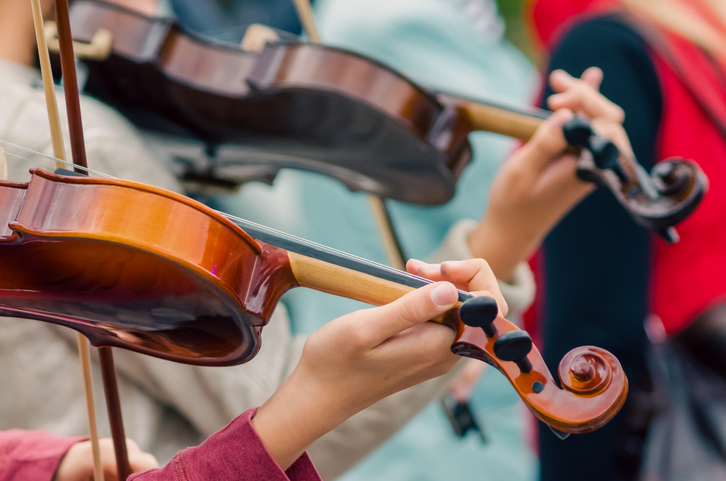
Learning a violin is so much more than just mastering notes on a page—it is a life-changing doorway to personal growth, joy, and community. When young learners pick up a violin in elementary school, they open the door to incredible developmental gains. Here are five remarkable benefits of violin lessons for young students—and how learning music can help them reach their full personal and academic potential.
The Benefits Of Violin Lessons
-
Sharpens Fine Motor Skills and Coordination
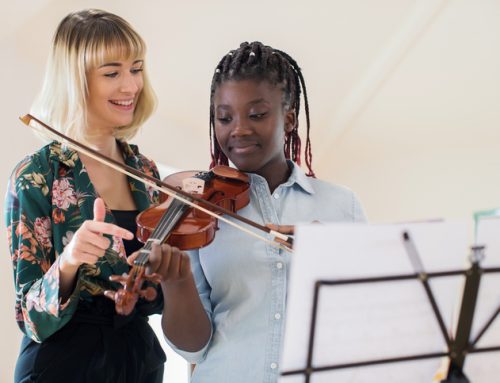
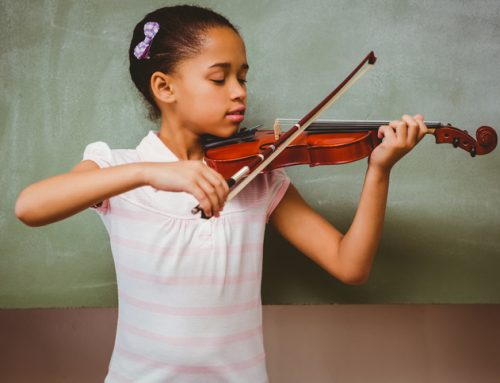
Playing violin for kids requires a unique blend of balance, dexterity, and posture. The left hand operates independently to press tiny points on the fingerboard, while the right arm controls the bow’s speed and pressure. Developing this two-handed coordination refines fine motor control, spatial awareness, and physical poise—skills that benefit children in sports, writing, and everyday physical activities.
-
Boosts Self-Confidence and Self-Expression
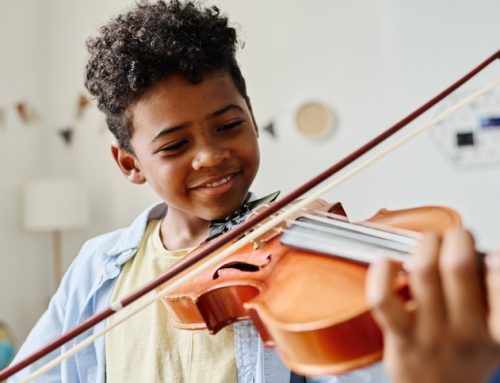
There is nothing quite like the pride on a young musician’s face when they master a passage they once found challenging. Overcoming difficulty on the violin teaches students that hard work leads to real progress. This builds self-efficacy—the belief in one’s ability to succeed—which spills over into classroom academics and social interactions.
-
Teaches Discipline, Patience, and Focus
In today’s fast-paced, digital world, learning an instrument offers a rare space for mindful, incremental growth. Mastery doesn’t happen overnight. By committing to small, daily practice sessions, elementary students learn the value of perseverance and goal-setting—virtues that serve them well into adulthood.
-
Fosters Teamwork and Social Belonging
The broad music education benefits extend far beyond solo practice. When children play together in group classes or string orchestras, they learn essential social skills like active listening, empathy, and cooperation. Making music as a team builds strong friendships and instills a deep sense of belonging within their school and community.
The Powerful Cognitive Benefits Of Music
When a young student reads sheet music, holds a bow, and presses down on strings all at once, their brain undergoes a full-body workout. Research shows that early instrumental training engages both the left and right hemispheres simultaneously.
The cognitive benefits of music education include:
- Enhanced Memory: Recalling rhythms, fingerings, and note patterns sharpens both short-term working memory and long-term retention.
- Stronger Language & Reading Skills: Learning pitch and rhythm trains the auditory cortex, helping children distinguish subtle sounds in language and improve reading fluency.
- Math & Spatial Skills: Counting beats and understanding sub-divisions directly translates to foundational math concepts like fractions and patterns.
Unlock Your Student’s Potential Through Music
At A Gift for Music, our mission is to empower youth to discover their creativity through tuition-free string education. By introducing string programs early, we help children build academic tools, emotional resilience, and lifelong artistic passions, because every child deserves the opportunity to envision a bright, creative future for themselves. Get your student started in violin lessons today.